
The 2026 Resume: Why Your Media Kit is Your Most Powerful Sales Tool
In the high-stakes creator economy of 2026, a “link in bio” and a high follower count are no longer enough to secure premium partnerships. As brands shift their budgets toward data-driven ROI, your media kit has evolved from a simple PDF into a sophisticated business proposal. At SixtySix Media Inc., we receive hundreds of pitches weekly; the ones we move to the top of the pile are those that respect the brand’s time by providing immediate, verifiable value. If you want to play in the big leagues of B2B and enterprise partnerships, you need a media kit that speaks the language of a CMO.
The “Why” is simple: Brand managers in 2026 are overwhelmed. They don’t have time to hunt for your engagement rates or guess your audience’s location. A professional media kit eliminates friction, answering every potential question before it’s even asked. It transforms you from a “content creator” into a “strategic partner.” This guide outlines the essential components of a 2026-ready media kit that We at 66.Media consider non-negotiable.
1. The “Elevator Pitch” Bio: Defining Your Unique Angle
The first page of your media kit shouldn’t just be about who you are—it should be about the problem you solve for a brand. In 2026, “lifestyle creator” is too vague. You need a specific “Unique Selling Proposition” (USP).
- The 3-Sentence Bio: State who you are, what niche you dominate, and the specific value your community provides. Example: “I help sustainable tech brands reach eco-conscious Gen Z professionals through high-retention video storytelling.”
- The Professional Headshot: First impressions are visual. Use a high-resolution, well-lit photo that reflects your brand’s aesthetic. If you’re a tech reviewer, be in your studio; if you’re a fitness creator, be in your element.
- Core Values: Briefly list 3-4 values (e.g., Transparency, High Production Quality, Sustainable Living) to ensure brand alignment from the start.
2. Advanced Metrics: Moving Beyond Follower Counts
By 2026, “Vanity Metrics” like total followers have been relegated to the background. Brands now prioritize Retention and Intent. Your media kit must showcase the data that actually predicts a successful campaign.
- The “Big Three” Stats: Average Video Completion Rate (VCR), Engagement-to-Reach Ratio, and Save Rate. In 2026, “Saves” are a higher-intent signal than “Likes.”
- Platform-Specific Data: For YouTube Shorts, show average watch time. For TikTok Shop, show your GMV (Gross Merchandise Volume) if applicable. For Amazon Influencers, highlight your conversion rate.
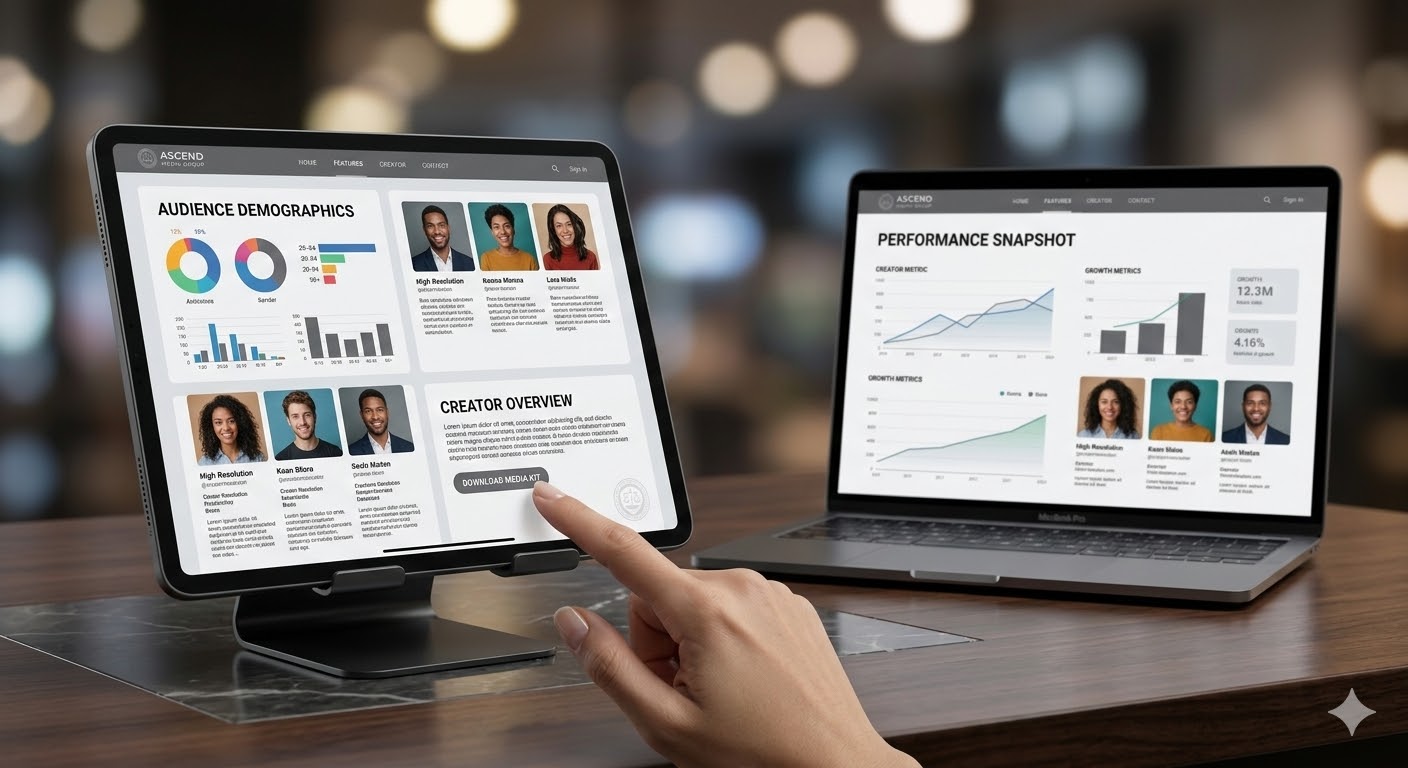
- Audience Demographics: Don’t just list “United States.” Provide a breakdown of top cities, age brackets, and interests. Brands need to know if your audience matches their target SKU.
3. The “Case Study” Slide: Proving Your ROI
Veteran creators know that “Proof of Work” is the most persuasive part of a pitch. Instead of just listing brand logos, provide a Mini-Case Study. This demonstrates that you understand business objectives.
The Case Study Formula:
- The Partner: Brand Name.
- The Objective: “Drive 500 sign-ups for a new SaaS tool.”
- The Execution: “Created a 3-part YouTube Shorts series using High-Conversion Scripting.”
- The Result: “Generated 720 sign-ups with a 4.2% CTR.”
If you are new to the industry, show “Organic Wins.” Highlight your best-performing organic post and explain why it resonated with your community. This shows you have a repeatable system for success.
4. Service Menu and Collaboration Tiers
Avoid the “back-and-forth” trap by clearly outlining how brands can work with you. In 2026, we recommend offering Content Bundles rather than a-la-carte posts. This encourages larger, more effective campaigns.
- Standard Deliverables: Define what a “Package” includes (e.g., 1x TikTok, 2x IG Stories, and Usage Rights for 30 days).
- Add-Ons: List high-value extras like “Raw Footage Delivery,” “Whitelist Rights,” or “Link in Bio Placement.”
- Production Standards: Mention your gear and editing capabilities. If you use professional setups (refer to our Best Budget Camera Gear guide), highlight that your content is “Ad-Ready” from day one.
5. Frictionless Contact and Next Steps
The biggest mistake creators make is having a beautiful media kit with no clear way to start the deal. Your final page must be a Call to Action (CTA).
- Direct Contact: Provide a professional business email (no DMs).
- The “Working Together” Process: Briefly outline your workflow (e.g., Discovery Call -> Contract -> Content Draft -> Live). This makes you look organized and easy to work with.
- Clickable Links: If your media kit is a PDF, ensure every social icon and “Contact Me” button is a live, clickable link.
SixtySix Media Insight: In 2026, the “Live Media Kit” is trending. Tools that provide a real-time, auto-updating dashboard of your stats are replacing static PDFs. This level of transparency builds instant trust with B2B brand partners.
Final Thoughts
Your media kit is the “face” of your business. By focusing on niche authority, high-intent metrics, and proven results, you position yourself as a low-risk, high-reward investment for any brand. Remember, you aren’t just selling a post; you are selling access to a community you have spent years building. Treat that access with the professional respect it deserves.
At SixtySix Media Inc., we specialize in helping creators refine their professional presence and connect with the world’s most innovative brands.
Ready to get your media kit in front of the right people? Explore our Brand Partnerships to join our network, or check out our guide on Getting Accepted into the Amazon Influencer Program to bolster your stats.