
In the 2026 creator economy, “budget” no longer means “low quality.” With the surge of the Amazon Influencer Program and TikTok Shop, the demand for crisp, high-conversion product videos has pushed manufacturers to pack pro-level features into entry-level bodies. At SixtySix Media Inc., we believe that your gear should be an asset, not a debt. You don’t need a $10,000 RED camera to land Brand Partnerships; you need a kit that handles 4K detail, accurate color, and smooth motion.
The goal of product videography is to make the item look better than it does in real life. This requires specific tools for macro shots, stable movement, and color fidelity. If you are just starting your journey, we recommend reviewing our 2026 Approval Blueprint to see the quality standards required today. Below is our vetted list of the best “bang-for-your-buck” gear for 2026.
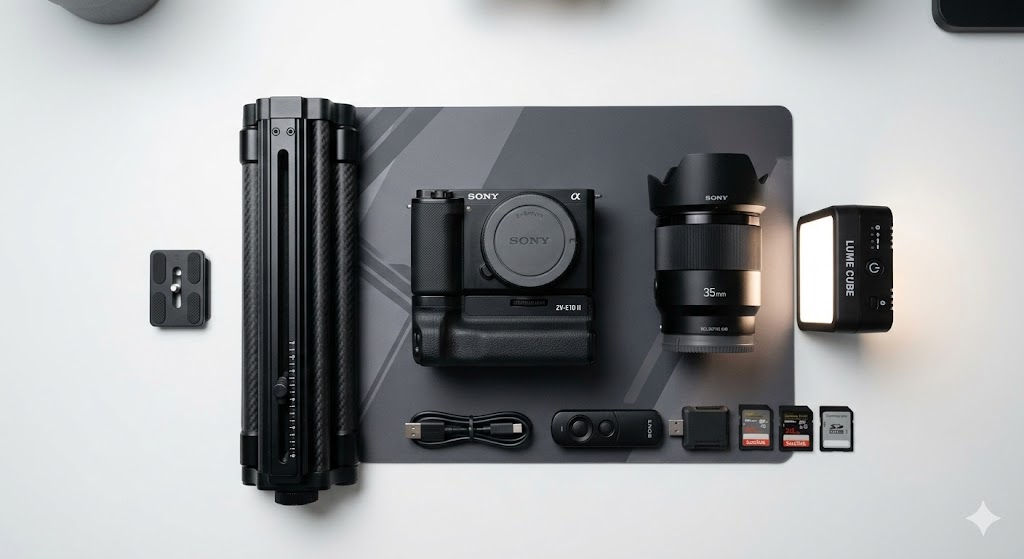
1. The Camera Body: Sony ZV-E10 II vs. Canon R50 V
For product-focused creators, two cameras dominate the budget conversation this year. Both offer 10-bit color, which is essential for color-grading your footage to match a brand’s specific palette.
- Sony ZV-E10 II: The gold standard for product reviewers. Its “Product Showcase” mode automatically shifts focus from your face to the object you’re holding. With its 26MP APS-C sensor and access to the massive E-mount lens ecosystem, it is a tool built for Brand Growth.
- Canon R50 V: A fantastic alternative for those who prefer Canon’s “Color Science.” It features a side-mounted tripod socket, making it the best budget choice for native vertical video (9:16) without needing a cage.
2. The “Hero” Lens: 35mm or 50mm Prime
Stop using your kit lens for product shots. To get that blurry background (bokeh) that makes a product “pop,” you need a prime lens with a wide aperture. For product videography, we recommend a 35mm or 50mm lens with an f/1.8 aperture.
Pro Tip: Look at the Sony FE 50mm f/1.8 or the Canon RF 35mm f/1.8 Macro. The “Macro” designation is the secret sauce—it allows the lens to focus on objects just inches away, capturing the fine textures of jewelry, electronics, or skincare packaging that generic lenses would blur.
3. Motion: The Motorized Slider Advantage
Static shots are boring. To compete in 2026, you need movement. While a gimbal is great for lifestyle, a motorized slider is the king of tabletop product videography. It provides repeatable, silky-smooth lateral movement that screams “high production value.”
The Neewer ER1 Carbon Fiber Slider or the Accsoon Toprig S60 are industry favorites for budget-conscious creators. Adding a slow, 5-second slide across a product while you narrate your script creates a cinematic feel that increases viewer retention and helps your content stand out in the Articles category feed.
4. Lighting: High CRI LED Panels
As we discussed in our recent guide on Lighting Tips, color accuracy is everything. For a budget setup, we recommend the Godox SL150II or the Nanlite Forza 150. These lights offer a high CRI (95+), ensuring that the “Brand Navy Blue” doesn’t look like “Generic Purple” on camera.
Pair these with a 35-inch softbox to wrap the light around your product, softening shadows and eliminating the “cheap” look of direct flash or overhead room lights.
5. Stability: The Overhead (C-Stand) Rig
The “Top Down” shot is a staple of product reviews—think of unboxing videos or “What’s in my bag” segments. A standard tripod often gets its legs in the shot. The solution is a C-Stand with a Boom Arm or a heavy-duty tripod with a 90-degree center column like the K&F Concept TM2515T.
This allows you to position the camera directly over the product, providing a clean, flat-lay perspective that is highly favored by B2B brands for social media advertisements.
The “Starter Pro” Shopping List:
- Camera: Sony ZV-E10 II ($1,000 range)
- Lens: 50mm f/1.8 Prime ($200-$300 range)
- Light: Godox SL150II + Softbox ($250 range)
- Motion: Neewer Motorized Slider ($300 range)
- Total Investment: Approx $1,800 for a studio that rivals pro agencies.
Final Thoughts
Building a product videography kit is about balance. You don’t need every piece of gear on day one. Start with a solid camera and one prime lens, then add motion and specialized lighting as your Monetization Strategy begins to pay off. In 2026, the creator with the most intentional gear—not the most expensive—is the one who wins the contract.
Ready to put your new gear to work? Read our latest Amazon acceptance guide to start earning. To learn more about how we support professional media growth, visit our About Us page.
Want to see your gear in action with top-tier brands? SixtySix Media Inc. connects creators with the inventory they love. Explore our Brand Partnerships or Contact Us to join the 66.Media roster.