
Transparency is Your Best Business Strategy
In the creator economy of 2026, trust is the only currency that doesn’t devalue. As affiliate marketing continues to dominate the e-commerce landscape, the Federal Trade Commission (FTC) and global regulators have significantly ramped up enforcement. At SixtySix Media Inc., we’ve seen that a single compliance mistake can lead to more than just a deleted post—it can result in account bans, heavy fines, and a permanent loss of audience trust. Understanding the legalities of affiliate marketing is no longer a “back-office” concern; it is a front-line requirement for every professional creator and B2B brand.
The “Why” behind these strict rules is simple: consumers have a right to know when a recommendation is biased by a financial incentive. Whether you are receiving a commission, a free product, or even just a significant discount, that “material connection” must be disclosed. As we navigate 2026, “I didn’t know” is no longer a valid legal defense. This guide outlines the FTC disclosure rules and platform-specific requirements you must follow to stay protected.
1. The “Clear and Conspicuous” Standard
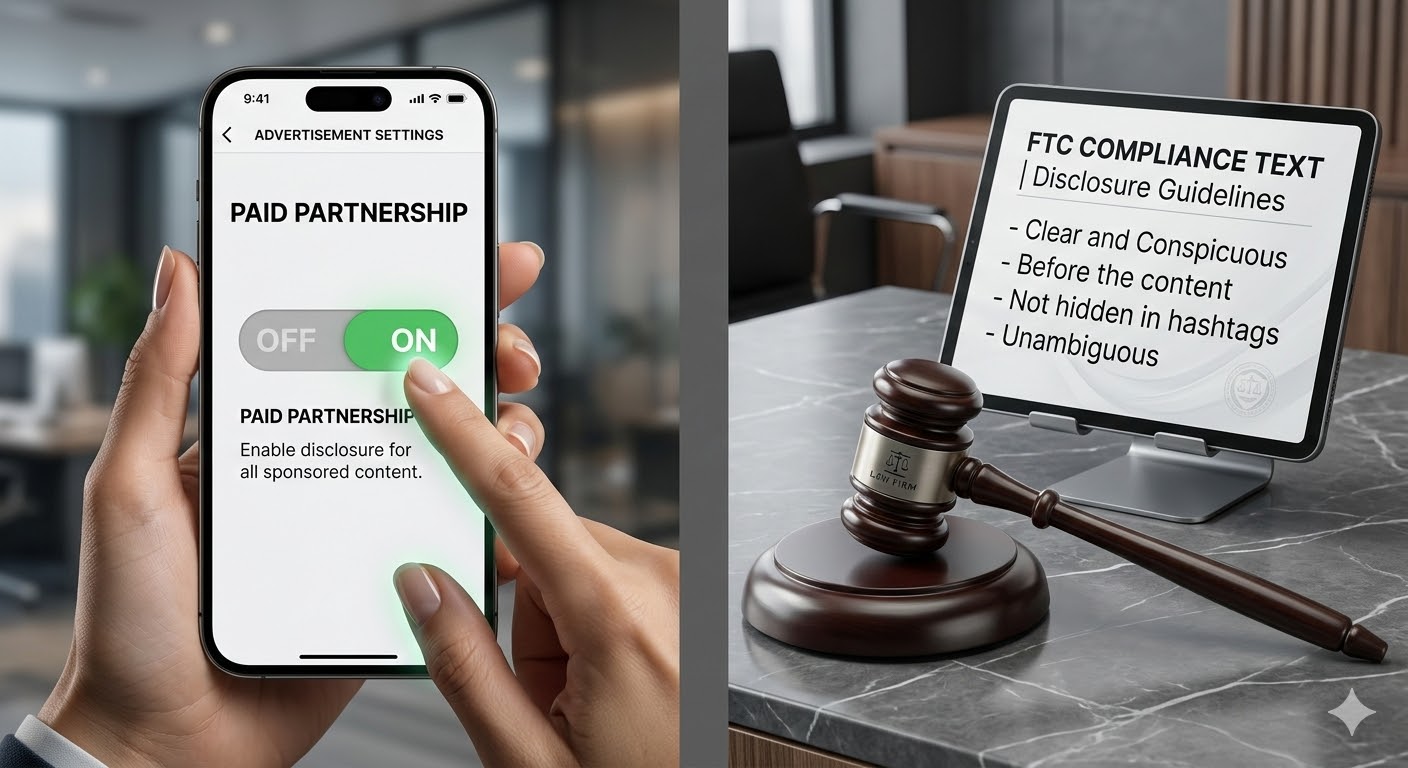
The bedrock of all affiliate legalities is the “Clear and Conspicuous” standard. In 2026, the FTC has clarified that a disclosure is only effective if it is unavoidable. If a consumer has to click “See More,” scroll past the first three lines of a caption, or hunt through a string of hashtags to find your disclosure, you are in violation.
- Placement is Everything: Disclosures must appear *before* the affiliate link or the endorsement. In a blog post, this means at the very top. In a social caption, it must be in the first two lines.
- Language Matters: Use plain, unambiguous terms. The FTC explicitly recommends “#ad,” “Paid link,” or “Commission earned.” Vague terms like “#collab,” “#sp,” or “Thanks to [Brand]” are officially insufficient in 2026.
- Visual Contrast: Your disclosure must be easy to read. Avoid tiny fonts, low-contrast colors (like white text on a light background), or placing text over busy parts of a video frame.
2. Platform-Specific Requirements for 2026
While the FTC sets the federal standard, each platform has its own built-in tools. SixtySix Media Inc. advises creators to use a “Double-Disclosure” method: use the platform’s tool *and* include your own written/spoken disclosure. This ensures you are protected even if a platform’s UI changes.
TikTok and Instagram Reels
For short-form video, the disclosure must be superimposed on the video itself. A caption disclosure alone is not enough for 2026 standards because the video is often shared or embedded without the caption. Ensure the “#ad” or “Paid Partnership” label stays on screen long enough for an average person to read it.
YouTube and Podcasts
In 2026, if you are making a verbal endorsement, you must provide a verbal disclosure. You cannot rely solely on the description box. At 66.Media, we recommend a verbal mention within the first 30 seconds of the video, supplemented by a text overlay during the product demonstration.
Amazon Influencer Program
Amazon has its own strict Operating Agreement. If you are part of the Amazon Influencer Program, you are legally required to include the following exact phrase: “As an Amazon Associate, I earn from qualifying purchases.” This must be visible on your storefront and near any affiliate link you share.
3. Disclosing “Gifted” and “No-Obligation” Products
A common misconception in 2026 is that if you weren’t “paid” in cash, you don’t have to disclose. This is false. The FTC considers free products, travel, and exclusive access as “material connections.”
- The “Gifted” Rule: If a brand sends you a product for free, even if they didn’t ask for a review, you must disclose that the product was gifted if you choose to show it.
- The “Employee” Rule: If you work for a company (or are a founder) and promote its products on your personal channel, you must disclose your employment status.
- The “Personal Relationship” Rule: If the brand owner is a close friend or family member, this must be disclosed as it could reasonably influence your review.
4. The Danger of “Deceptive” AI and Filters
As we discussed in our article on AI in Videography, 2026 technology allows for incredible enhancements. However, from a legal standpoint, you cannot use AI or filters to misrepresent a product’s performance. For example, using a skin-smoothing filter in a foundation review or using AI to exaggerate the brightness of a flashlight is considered deceptive advertising and is a high-priority enforcement area for the FTC.
Pro Tip: If you use AI to significantly alter a video, include a “Digitally Altered” or “AI-Generated” disclosure to maintain transparency and comply with 2026 social media transparency acts.
5. Your Compliance Checklist for Every Post
To help our partners stay compliant, we’ve developed the 66.Media Legal Audit. Before you hit publish, run through this list:
| Checkpoint | Requirement |
|---|---|
| Visibility | Is the disclosure visible before the “More” button? |
| Audio/Visual | Is the disclosure both spoken and written in video content? |
| Clarity | Did I use a clear term like “#ad” instead of “collab”? |
| Link Proximity | Is the disclosure placed immediately next to the affiliate link? |
SixtySix Media Insight: Brands are now legally liable for the disclosures of the creators they hire. If you are a brand, ensure your creative briefs explicitly mandate FTC-compliant disclosures. A “Notice of Penalty Offense” from the FTC can devastate a brand’s reputation and bottom line.
Final Thoughts
Affiliate marketing is a powerful tool for growth, but it must be built on a foundation of honesty. By following these disclosure rules, you aren’t just “staying out of trouble”—you are signaling to your audience that you value their trust more than a quick commission. In 2026, the most successful creators and brands are the most transparent ones.
At SixtySix Media Inc., we help our partners navigate these legal complexities so they can focus on what they do best: creating world-class content.
Want to ensure your next campaign is fully compliant? Explore our Brand Partnerships for managed compliance services, or Contact Us to audit your 2026 affiliate strategy.