
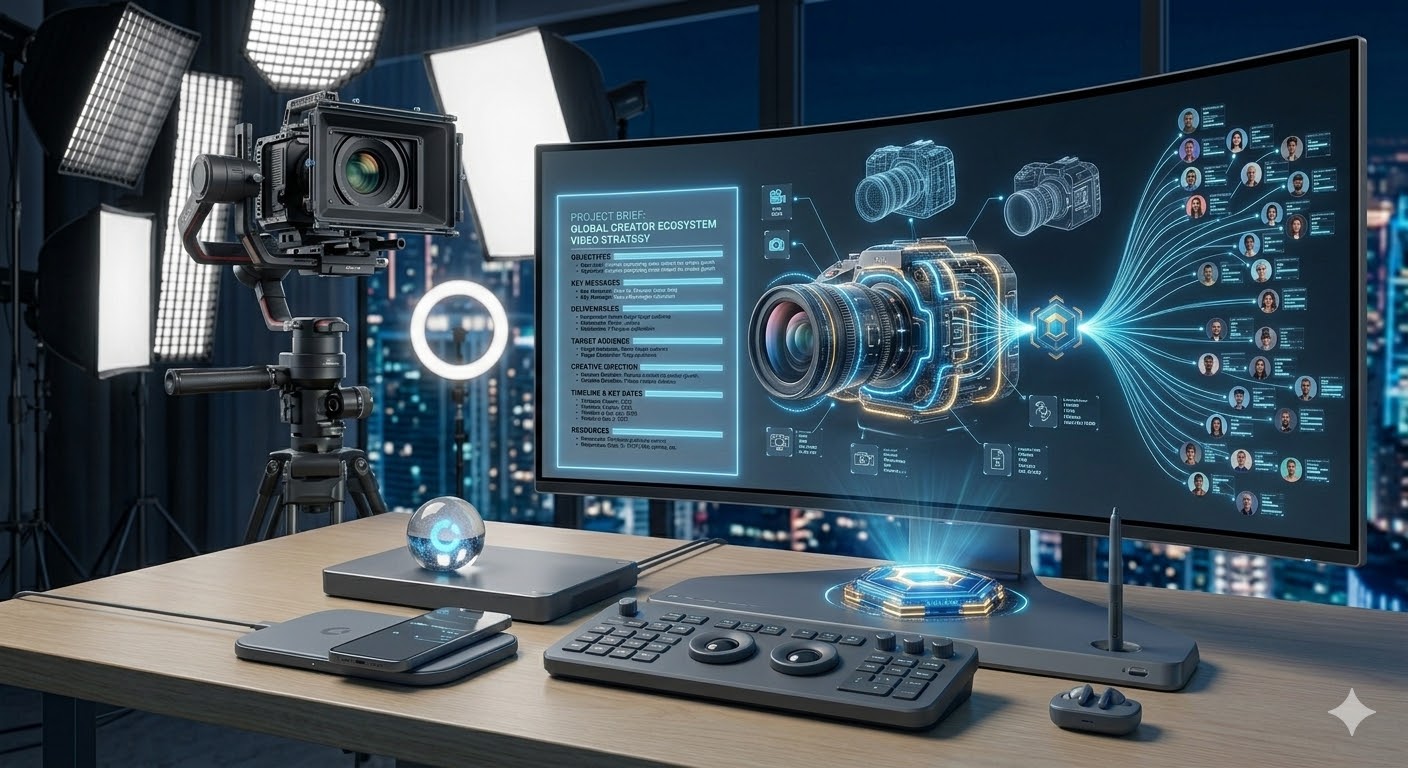
The Generative Revolution: Moving from Manual to Machine-Assisted
The year 2026 has officially become the “Inflection Point” for media production. For years, product videography was a labor-intensive process involving hours of lighting setups and days of tedious post-production. Today, at SixtySix Media Inc., we are witnessing a paradigm shift. Artificial Intelligence (AI) is no longer just a buzzword used in Silicon Valley; it is the fundamental engine driving the efficiency of shoppable video and high-conversion brand content. If you are a creator or an e-commerce seller, understanding how AI is reshaping the lens is the only way to stay competitive in an increasingly automated marketplace.
The “Why” behind this transformation is the demand for “Content at Scale.” In 2026, a single high-quality video is no longer enough to dominate the Amazon or TikTok ecosystem. Brands now require dozens of variations tailored to different subcultures. AI allows us to bridge the gap between “Cinematic Quality” and “Viral Velocity.” This guide explores the veteran techniques We use at 66.Media to leverage AI without losing the human touch that drives sales.
1. AI-Driven Virtual Production and Background Synthesis
One of the most significant shifts in 2026 is the death of the “Green Screen.” AI-powered Generative Backgrounds now allow creators to place a product in any environment—from a luxury marble kitchen to a rugged mountain top—without ever leaving the studio. Tools like Neural Radiance Fields (NeRFs) can take a few photos of a product and turn them into a fully interactive 3D video asset.
- Contextual Environment Matching: AI can now analyze a product’s aesthetic and automatically generate a lighting environment that matches. This ensures that a sleek tech gadget always has those perfect #666666 grey reflections.
- Virtual Sets: Small-scale creators can now achieve “Big Brand” looks on a budget. By using AI to clean up messy backgrounds or insert professional studio elements, the barrier to entry for the Amazon Influencer Program has never been lower.
2. Smart Editing: The End of the “Rough Cut”
In 2026, the most time-consuming part of videography—editing—is being handled by “Agentic Editors.” AI can now take 30 minutes of raw “A-roll” and “B-roll” footage and automatically identify the best takes, sync them to music, and remove “umms,” “ahhs,” and long silences in seconds.
- Auto-Reframing: AI automatically identifies the “Hero” of the shot and reframes 16:9 horizontal footage into 9:16 vertical for YouTube Shorts and TikTok Shop. This allows for a “Film Once, Distribute Everywhere” workflow.
- Smart B-Roll Insertion: Based on the transcript of what a creator says, AI can suggest and insert relevant B-roll footage from a brand’s library. If you mention “durability,” the AI will find the clip of the product being drop-tested.
- High-Conversion Scripting: AI tools now analyze our scripting frameworks to suggest “Hook” variations based on real-time trending data on social platforms.
3. AI Color Grading and Lighting Correction
Consistency is the hallmark of a professional media agency. In 2026, AI “Match Grade” tools ensure that every video in a campaign looks identical, regardless of the camera used or the lighting conditions of the creator’s home. AI can now “relight” a scene after it has been filmed, adding highlights to a product’s edges that were missed during the shoot.
For creators still mastering the basics, we always suggest starting with our 5 Essential Lighting Tips. However, AI acts as the ultimate “safety net,” allowing us to save footage that would have previously been unusable due to poor exposure or white balance issues.
4. Generative Audio and Multi-Lingual Dubbing
The 2026 creator economy is global. AI has revolutionized the “Audio” half of videography through Voice Cloning and Perfect Lip-Syncing. An international brand can now take a review from one of our US-based creators and accurately dub it into five different languages, with the creator’s mouth movements matching the new audio perfectly.
- Noise Suppression: AI can isolate a creator’s voice from background noise so effectively that a review filmed in a busy city park can sound like it was recorded in a soundproof booth.
- Dynamic Soundscapes: AI can generate custom, royalty-free background music that ebbs and flows with the emotional beats of the review, increasing viewer retention.
5. Predictive Analytics: Editing for the Algorithm
At SixtySix Media Inc., we are now using AI to “Pre-Audit” videos before they are even posted. AI “Heatmaps” can predict where a viewer’s eyes will go on the screen and identify the exact second a viewer is likely to scroll away. This allows us to make data-driven edits—moving a product reveal forward or changing a caption color to keep the “Retention Graph” high.
SixtySix Media Insight: AI is a tool, not a replacement. The “Uncanny Valley” is real; if a video looks *too* perfect or the voice sounds *too* robotic, conversion rates drop by up to 30%. In 2026, the winning strategy is “Human-Led, AI-Augmented.”
Final Thoughts
The evolution of AI in product videography is the greatest “Force Multiplier” we have ever seen in the media industry. It allows for a level of speed, personalization, and technical perfection that was previously reserved for the world’s biggest brands. By embracing AI editing and production tools, you aren’t just saving time—you are building a scalable content engine that can survive the demands of 2027 and beyond.
SixtySix Media Inc. stays at the cutting edge of these technologies to ensure our partners always have the “Unfair Advantage” in their category.
Ready to upgrade your content production? Learn how we use AI to scale brands on our Brand Partnerships page, or browse the Best Budget Camera Gear that pairs perfectly with these AI tools.