
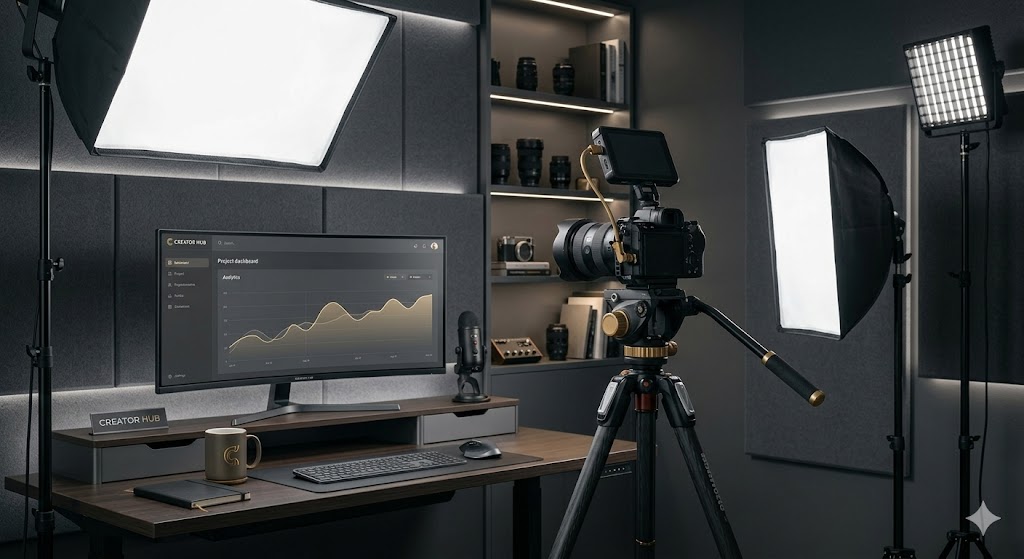
In the rapidly evolving creator economy of 2026, the barrier to entry has never been higher. Whether you are an e-commerce seller showcasing your latest inventory or a creator aiming for the Amazon Influencer Program, the visual fidelity of your content is your calling card. Professional product reviews live and die by their lighting. It is the difference between a video that looks like a casual hobby and one that commands high-ticket Brand Partnerships.
At SixtySix Media Inc., we have analyzed thousands of high-performing shoppable videos. The data is clear: viewers associate high-quality lighting with product trustworthiness. If a customer cannot see the texture, color, and fine details of a product, they are unlikely to click ‘Add to Cart.’ Below, we outline the five essential lighting pillars every professional reviewer must master to dominate the feed this year.
1. Master the Three-Point Lighting Setup
The gold standard for any studio-based content remains the three-point lighting setup. This configuration provides depth, dimension, and eliminates the “flat” look that plagues amateur reviews. To execute this like a veteran, you need to understand the role of each light:
- Key Light: This is your primary light source, placed at a 45-degree angle from the product. It should be the brightest and most defined.
- Fill Light: Placed on the opposite side of the Key Light, the Fill Light “fills” in the harsh shadows created by the Key, creating a balanced, professional look.
- Back Light (Hair Light): Positioned behind the product or the creator, this light creates a subtle rim of light that separates the subject from the background, adding a high-end 3D effect.
2. Prioritize Color Accuracy with High CRI Lights
For e-commerce sellers and reviewers, Color Rendering Index (CRI) is a non-negotiable metric. CRI measures how accurately a light source reveals the true colors of an object compared to natural sunlight. In 2026, we recommend using lights with a CRI rating of 95 or higher.
Why does this matter? If you are reviewing a beauty product or apparel, a low-quality light might make a vibrant red look like a muddy orange. This leads to high return rates and dissatisfied viewers. High CRI lighting ensures that what the viewer sees on their screen is exactly what they will receive in the mail.
3. Soften the Blow: The Importance of Diffusion
One of the most common mistakes we see at 66.Media is “harsh lighting.” Direct LED bulbs create “hot spots”—distracting bright reflections on plastic, glass, or metallic products. To achieve that buttery-smooth “tech reviewer” look, you must diffuse your light.
Pro Tip: Use large softboxes or diffusion silks. The larger the light source relative to the product, the softer the light. If you are on a budget, even a white shower curtain or professional-grade diffusion paper can transform a harsh work light into a professional studio lamp.
4. Control Your Environment: The “Blackout” Strategy
Natural light is beautiful but notoriously unreliable. If you are filming a 10-minute review and the sun goes behind a cloud, your exposure will shift, making the edit look unprofessional. For consistent Brand Growth, we suggest the “Blackout” strategy.
Close your curtains, turn off overhead ceiling lights (which usually have a sickly yellow tint), and start with a “black canvas.” By controlling every photon in the room, you ensure that your lighting is identical from the first frame to the last. This consistency is vital for maintaining the “Industry Insights” standard expected by premium B2B partners.
5. Use Practical Lights to Create Brand Atmosphere
While your product must be the star, your background shouldn’t be an afterthought. “Practical lights” are light sources that are visible in the frame—such as a desk lamp, an LED strip, or a neon sign. At SixtySix Media Inc., we often suggest using subtle cool-white or #666666 grey-toned practicals to create a modern, corporate-yet-approachable vibe.
Practicals add “depth” to your studio. They prevent your background from looking like a dark void and help reinforce your personal brand’s aesthetic. Just ensure they are dimmed low enough so they don’t distract the viewer’s eye away from the product itself.
Quick Checklist for Your Next Shoot:
- Is the product separated from the background?
- Are there any distracting “hot spots” on reflective surfaces?
- Is the color temperature consistent (e.g., all lights set to 5600K)?
- Does the lighting match the “mood” of the product?
Final Thoughts
Lighting is an investment that pays dividends in the form of higher conversion rates and better brand deals. As you refine your setup, remember that the most expensive gear doesn’t always win; the creator who understands the behavior of light does. By implementing these five tips, you are positioning yourself as a top-tier professional in the 2026 creator economy.
If you are looking to take your content to the next level and attract high-paying sponsors, we are here to help. Check out our guide on Your First 3 Amazon Shoppable Videos or learn more About Us to see how we empower the next generation of digital entrepreneurs.
Ready to scale your influence? Explore our Brand Partnerships opportunities today or Contact Us to join the SixtySix Media Inc. network.